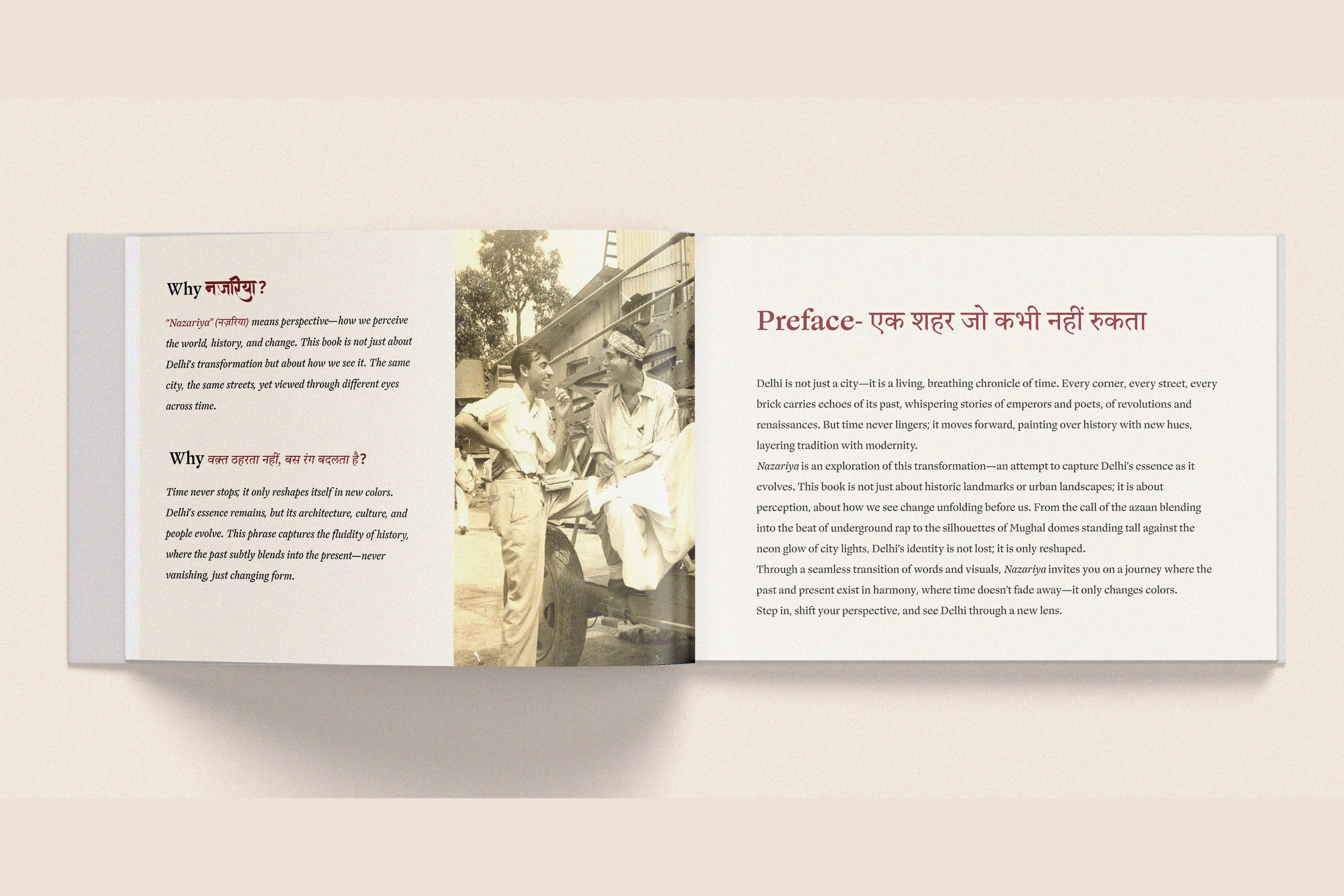
Nazariya is a coffee table book centered on Delhi, designed to present the city as a layered narrative across time. The core concept is perspective: how architecture, culture, and identity shift across different historical phases while still carrying visible continuities. The story moves through Mughal Delhi, British colonial transformation, post-independence nation-building, and contemporary urban coexistence, creating a clear sense of progression instead of isolated snapshots.
The project uses an editorial, print-inspired layout system with grid-based composition, controlled visual hierarchy, and deliberate whitespace rhythm. Imagery leads the storytelling, while typography remains minimal and refined to support, not overpower, the narrative. Each spread was designed to guide the reader from one period to the next with clarity, emphasizing contrast and continuity between eras.
Work included concept development, narrative structuring, visual direction, and layout design across multiple spreads. The typography system and composition rules were built to handle complex timelines while preserving readability and flow. Nazariya is positioned as a structured editorial storytelling project focused on cultural exploration and historical progression through design.